How FuturHealth grew 980% without compromising high-touch patient care
- AI Voice agents absorbed a 14x surge in call volume with 35% faster response times
- Support teams use AI Copilot autosend on 61% of replies, saving 13,000 hours a year
- 31% fewer live agents needed as AI handles volume shifts autonomously
- AI Voice interactions consistently score above 70% on AI Experience Score, signaling strong customer sentiment
About FuturHealth
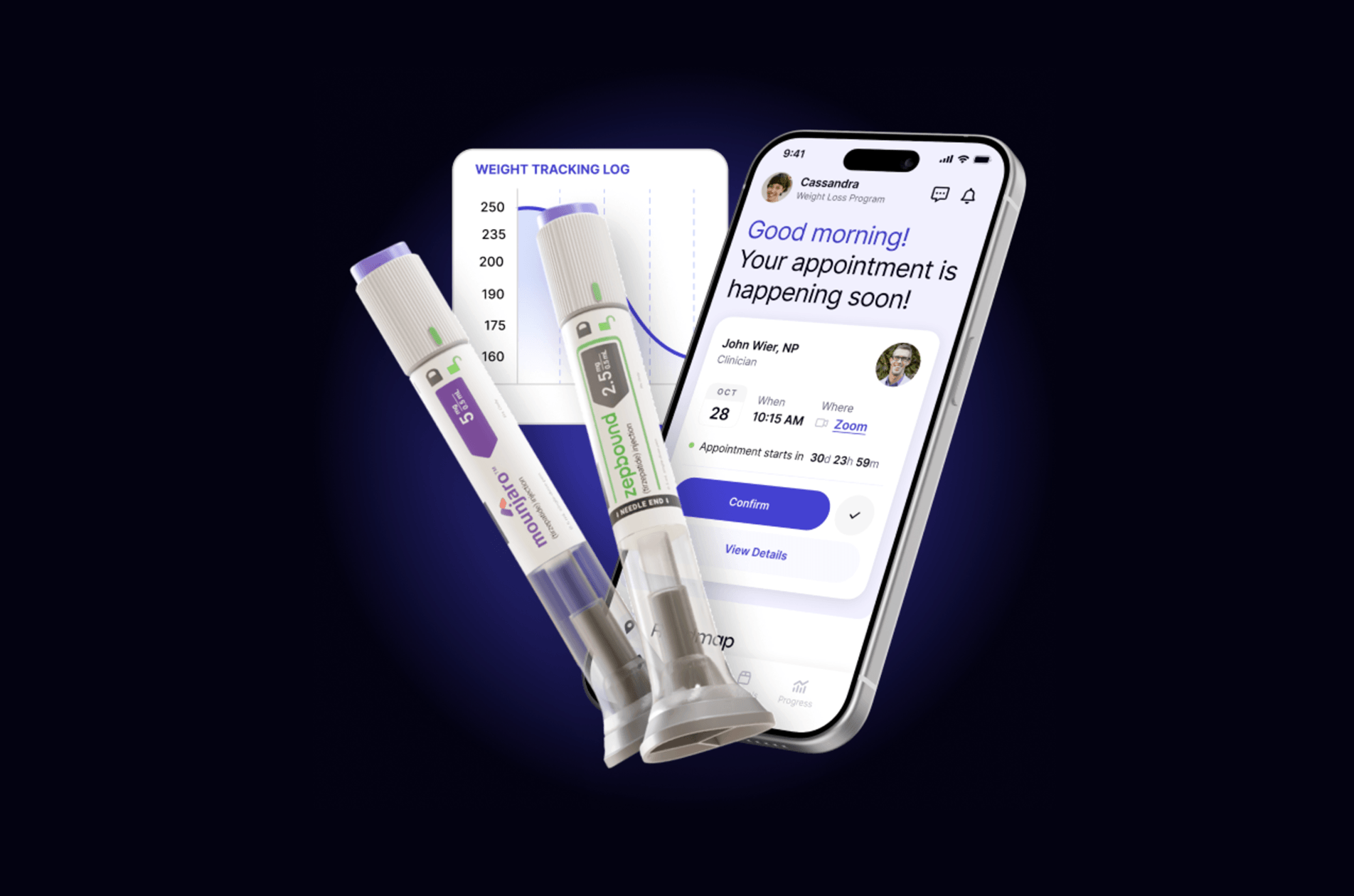
FuturHealth is transforming weight loss care through personalized telehealth. Founded in 2023, the company connects patients with specialized clinicians for GLP-1 medications, then wraps comprehensive support around their journey. From in-app nutrition to coaching, fitness guidance, medication fulfillment, and ongoing telehealth check-ins. It's healthcare that treats weight loss as the personal process it truly is.
That approach is working. Within a year of launching, FuturHealth achieved 980% growth in active patients. But explosive growth created operational strain.
Volume was nearly doubling every month, and while FuturHealth hired fast, new agents struggled to keep up. At one point the team was staring down a 10,000 ticket backlog.
With a growing team of agents, leaders spent countless hours capacity planning with spreadsheets. There was no real-time visibility into agent adherence or productivity. Forecasting was guesswork. And as a medical services company with strict compliance requirements (e.g., does this call get routed to a doctor or a support agent?) every scheduling decision and agent interaction carried weight.
AI was an obvious lever, but the critical question that remained was: How can you automate a service as human as healthcare?
“A lot of the work we're doing is helping people navigate something that can feel intimidating.” explains Thomas O'Rear, Director of Customer Experience at FuturHealth. “From understanding their medication to managing side effects to adjusting their nutrition. We need to be very present and very supportive."
Finding the right partner
Thomas was already familiar with Assembled’s Workforce Management products from previous roles in high-growth health tech environments. He had seen firsthand the limitations of legacy workforce management tools and how much operational overhead they created.
For FuturHealth, Assembled was the clear choice to bring structure to scheduling, forecasting, and real-time operations for their rapidly growing support team.
But workforce management was only the starting point.
As FuturHealth scaled, Thomas and his team were focused on a larger goal: reducing the volume of transactional support work so agents could focus on the moments that mattered most. High-touch patient support, retention, and concierge-style care.
When the team began evaluating AI solutions, Assembled’s integrated platform quickly stood out.
"The move to Assembled Voice AI and Copilot was an easy decision,” Thomas explains. “The value of connecting AI agents and human staffing, and then scenario planning for both without hacking something together in a spreadsheet is huge.”
For FuturHealth, the advantage wasn’t just AI agents or workforce management. It was the ability to run a hybrid workforce of humans and AI within the same operational system.
Fast implementation, thoughtful rollout
Speed mattered. FuturHealth couldn’t afford a long implementation while managing rising support volume.
Assembled partnered closely with FuturHealth to deploy quickly and iterate alongside the team as their needs evolved.
FuturHealth rolled out AI in phases, moving from WFM to AI Copilot and gradually expanding into customer-facing AI with Voice.
Phase 1: Copilot improves agent efficiency
The first priority was helping agents navigate complex healthcare support conversations more efficiently.
Customer inquiries often involve detailed topics such as medication side effects, dosage guidance, pharmacy fulfillment updates across vendors, and insurance questions. All while maintaining a high level of care and sensitivity.
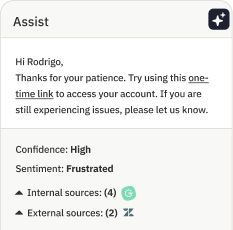
Assembled AI Copilot helped agents quickly find the right information and draft responses without interrupting the flow of patient conversations.
Adoption grew rapidly. Within the first month, Copilot generated over 2,800 AI-assisted replies. As confidence in the system increased, that number expanded to more than 27,000 monthly replies, with autosend rates steadily climbing.
Throughout the rollout, the team was intentional about how they introduced AI to the support organization, emphasizing that these tools were designed to support agents. “We’ve been very intentional with our team that the goal here is empowerment,” Thomas says. “This is a tool to make you more successful at supporting customers.”
"I don't think I personally want to hit a place where the customer experience is fully automated," Thomas reflects. "Humans have to be in the loop. They have value. The question is: what is the best experience for the customer, and what is the best use of our team?"
Phase 2: Voice AI kills transactional call volume
With Copilot driving efficiency for agents, FuturHealth expanded into AI Voice to address the next major opportunity: high-volume transactional calls.
Each year, FuturHealth receives more than 630,000 inbound calls; many related to routine requests such as medication order status, appointment scheduling, prescription refills, or dosing questions. These interactions require accurate information but don’t always require a human agent.
To meet the high standards required for healthcare, FuturHealth deployed Voice AI through carefully designed agentic workflows with strict guardrails. Assembled’s system grounds every response in verified knowledge and controlled workflows, ensuring patients receive accurate information.
Within months of launch, Voice AI was handling 15–20% of inbound calls, removing tens of thousands of routine interactions from the human support queue each year.
Phase 3: Human + AI workforce orchestration
As FuturHealth expands its AI usage, the biggest emerging advantage is in connecting AI agents directly to workforce management.
Instead of treating AI as a separate system, FuturHealth can adjust automation levels based on real-time operational conditions, balancing AI and human support depending on demand. “The power comes from connecting AI with workforce management,” Thomas says.
“The ability to dynamically adjust day-to-day when we have excess capacity or when demand is spiking is huge. It takes so much effort for the real-time team lead or operations manager to make those calls manually.”
By connecting AI agents to workforce planning, the team can forecast demand more accurately, scenario-plan for AI deflection, and dynamically balance AI agents and human support.
Results: Efficiency meets empathy
By combining workforce management with AI agents and Copilot, FuturHealth was able to scale support operations while maintaining a high-touch patient experience.
Voice AI now handles 15–20% of inbound calls, helping the team absorb a 14× increase in call volume as the business grew.
On the agent side, Copilot autosend is used on 61% of replies, reducing average handle time and saving the team over 13,000 hours annually so they can focus on more complex patient interactions.
Just as importantly, the quality of those AI interactions remains high. FuturHealth consistently maintains AI Experience Scores between 70-90% for Voice AI; a strong benchmark that indicates most AI conversations progress efficiently toward resolution while maintaining positive customer sentiment.
Together, these improvements enabled 31% headcount optimization, with AI absorbing routine demand while human agents focus on the moments where care and expertise matter most.
For FuturHealth, the goal isn’t full automation. It’s balance. With Assembled, the team can scale support while continuing to deliver the experience patients rely on.