
Support leaders spent this year answering a question that would've seemed impossible just a few years ago: How do you manage a team that's part human, part AI? Not just in theory, but in practice. With real tickets, real SLAs, and real customer expectations that keep climbing.
The answer wasn't to replace humans with AI or bolt automation onto legacy tools. It was to rethink the entire support operation — how work gets routed, how teams get scheduled, how performance gets measured — so AI and humans could work together effectively.
Here's what we shipped in 2025.
From deflection to orchestration
The AI chatbots of yesteryear were built to deflect, not resolve. They'd answer simple questions, escalate the hard ones, and leave support teams cleaning up the mess.
2025 changed that. Teams stopped asking "How do we keep customers away from agents?" and started asking "How do we get customers the right help — human or AI — as fast as possible?"
The challenge: If 60% of your volume is now automated, how do you forecast staffing? If AI handles nights and weekends, how do you schedule breaks? If automation performance fluctuates, how do you adjust coverage in real time?
We spent 2025 building the infrastructure to answer those questions — shipping hundreds of enhancements.
True omnichannel AI agents
We launched one of the first platforms to handle full automation across chat, email, and voice. Not three separate tools duct-taped together. One automation engine. One workflow builder. One knowledge base. One set of policies that works everywhere.
Teams using Assembled AI started seeing 60-70% resolution rates from week one and 80% containment without sacrificing customer satisfaction.
But we went beyond chatbots and into agentic workflows. Our AI agents handle complex multi-step scenarios — pulling order data from Shopify, updating records in Salesforce, processing refunds, verifying accounts. Decisions made across systems. Complete resolutions without human intervention. When escalation was needed, human agents got full context and clean ticket history.
Retention Express, a BPO handling nearly a million calls annually for car wash membership programs, deployed AI Voice to handle routine questions while seamlessly handing off complex cases. As CEO Bobby Thomson put it: "If I can solve voice, I can solve chat, and I can solve email, I just solve 95% of my problems."
The AI-WFM bridge
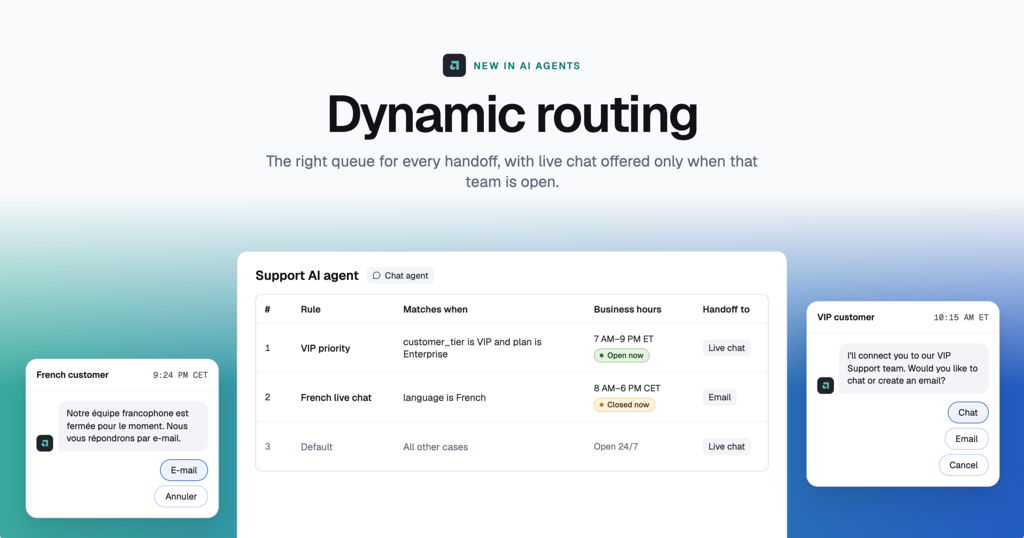
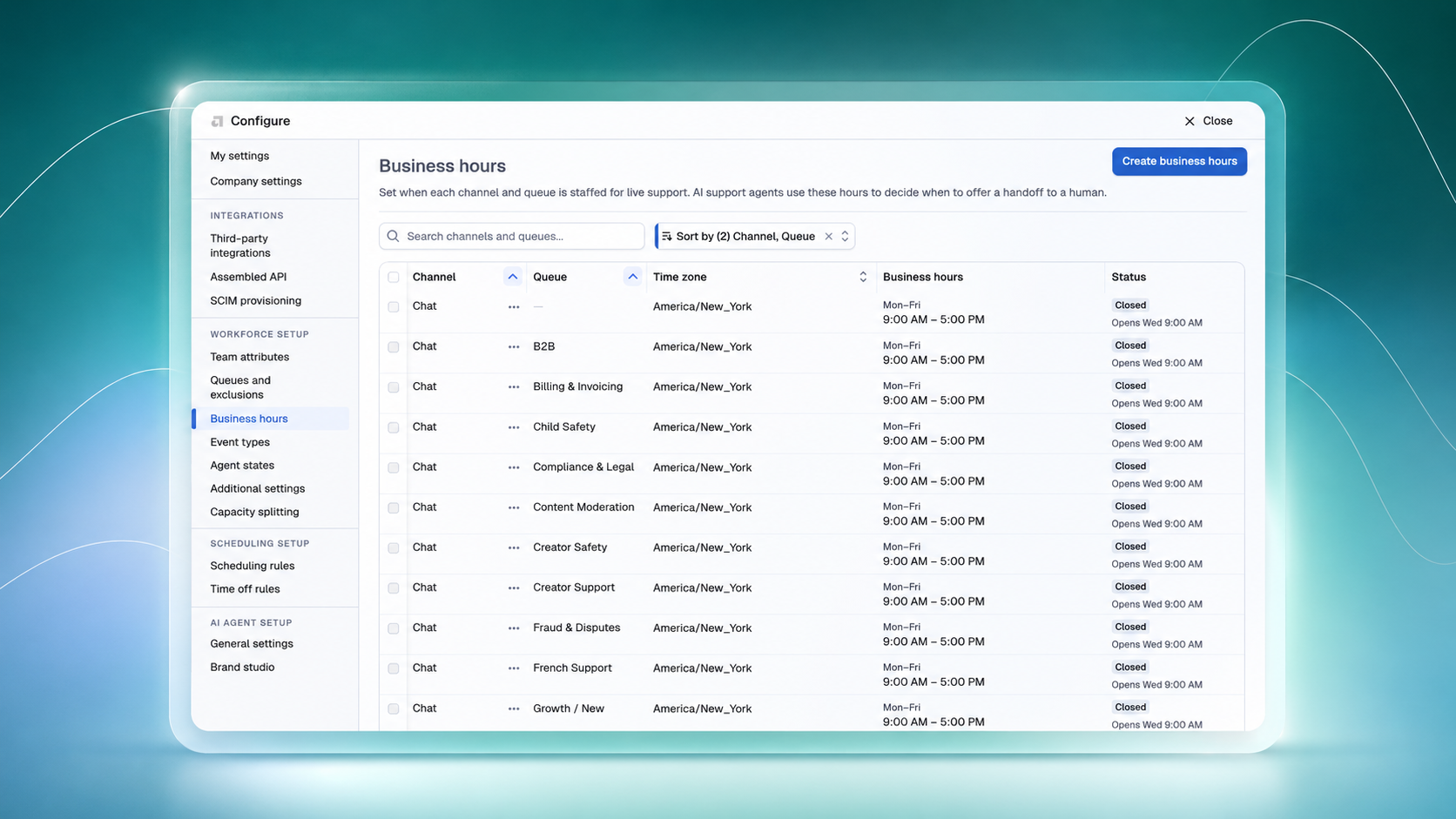
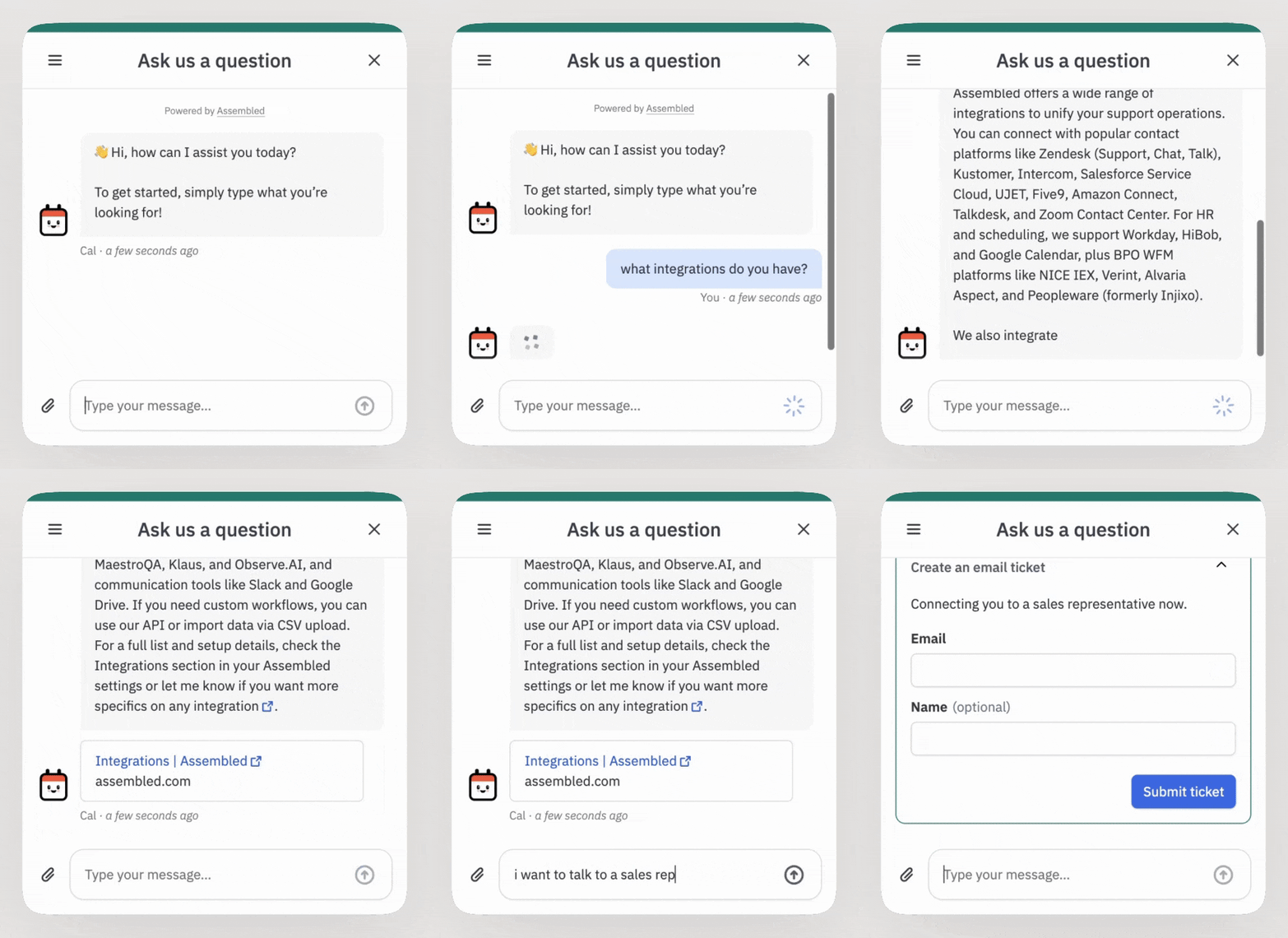
This is what makes Assembled unique: dynamic handoffs where AI agents know who's available, what they're good at, and route to the right human at the right time. Zero dropped escalations. Nobody waiting in limbo.
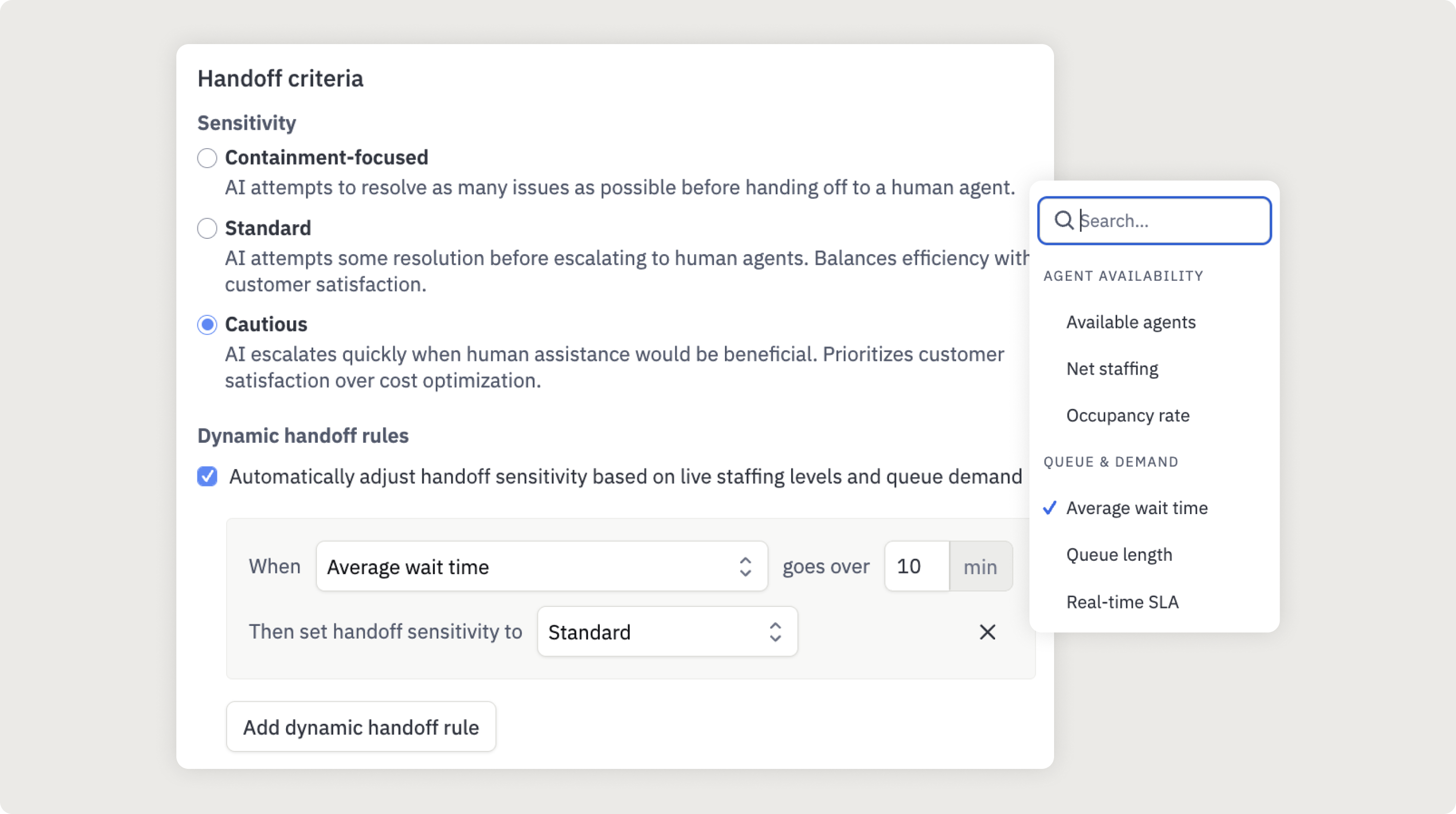
But the bridge goes deeper than handoffs:
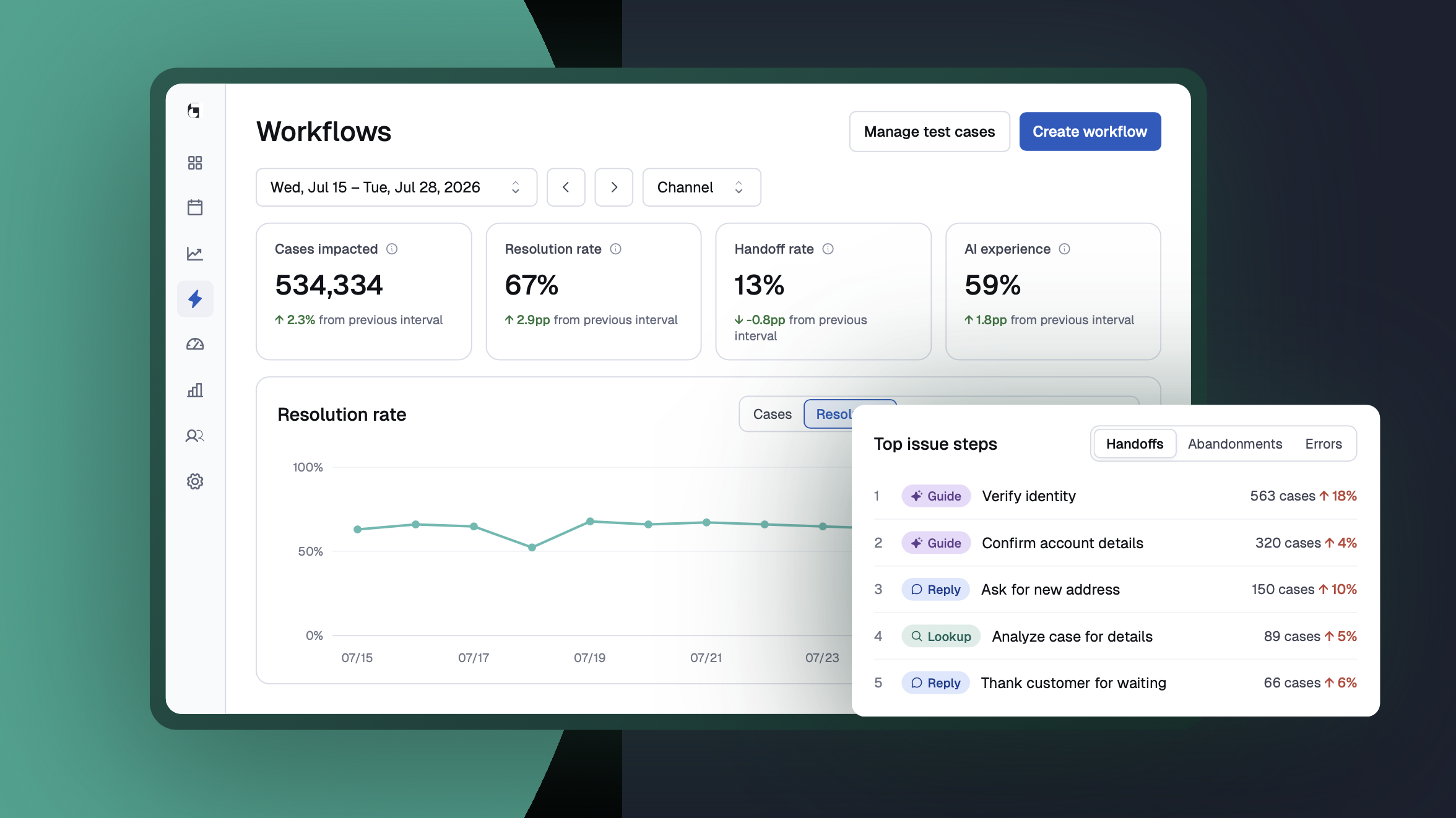
Agent Performance Reporting tracks automation impact, resolution rates, and containment by channel — so you see exactly what AI is contributing.
Copilot Impact Reporting measures handle time, efficiency gains, and CSAT when agents use Copilot versus when they don't — proving the ROI of AI assistance.
Assembled is the only platform showing how AI and humans perform together, not in silos.

Intelligence that scales
Throughout 2025, we shipped capabilities that made AI agents smarter:
Visual intelligence let AI process images across every channel — verifying IDs, reading receipts, troubleshooting with screenshots.
User segments let teams tailor AI behavior by customer type. VIPs got escalated immediately. First-time users got self-serve links. One AI agent, infinite configurations.
Multi-language support for AI agents removed geographical barriers without regional overhead or 24/7 language coverage.
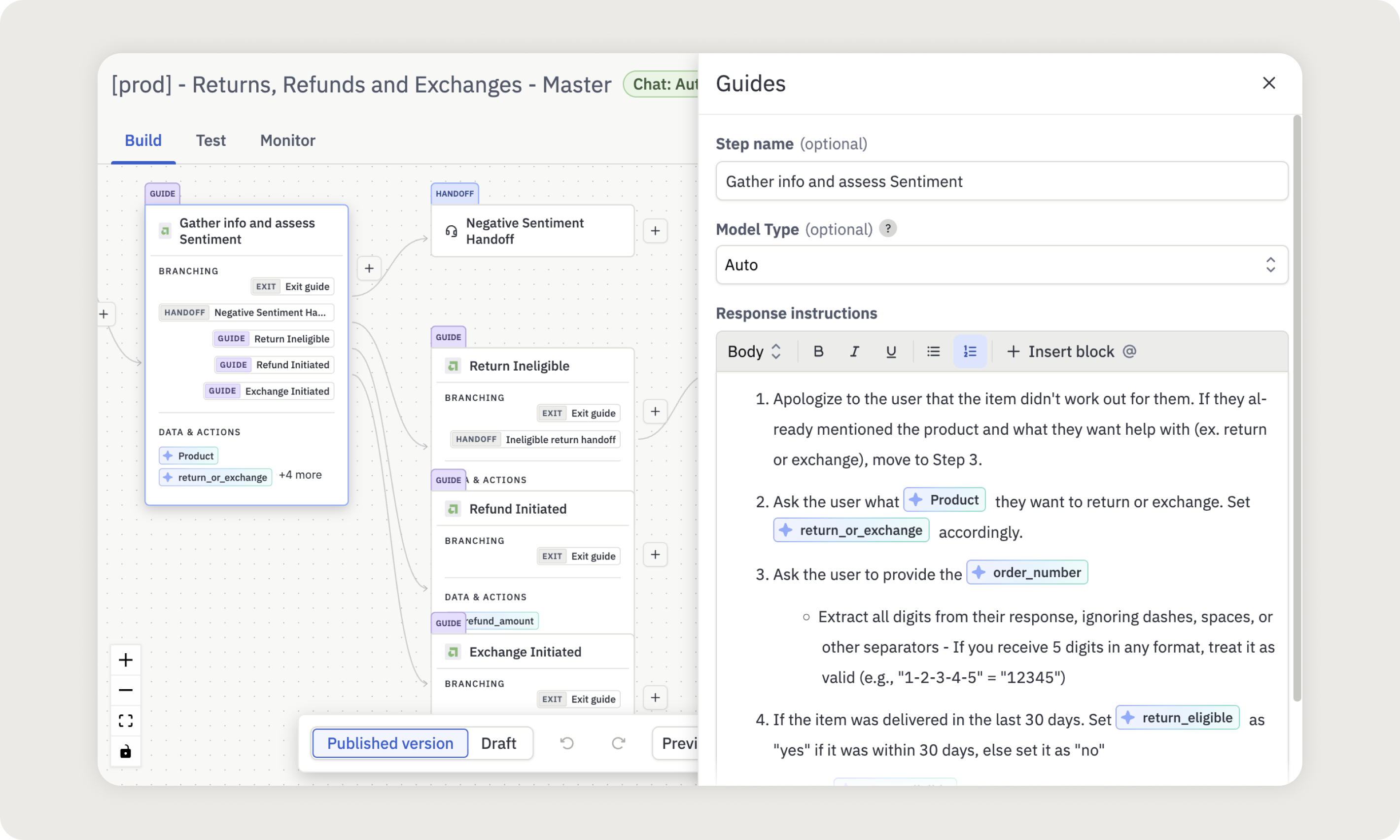
Dynamic workflow steps replaced dozens of static decision trees with single, intelligent guides. Workflow maintenance time dropped by half.
Scheduling for the AI era
Legacy WFM tools couldn't account for AI performance or adjust coverage when automation fluctuated. We rebuilt scheduling for hybrid operations.
Preply scaled from 30 to 200+ agents while their monthly scheduling process stretched from three days to a full week — all done manually in Google Sheets. After implementing AI-powered scheduling, that week collapsed to minutes. The result: 60% improvement in average handle time, 5.8% better adherence, and stable CSAT despite 7× growth — managed by a two-person WFM team.
ServiceTitan went further. Supporting 300+ agents across Armenia, Colombia, and the U.S., they needed schedules honoring over 80 rules — from Armenian labor laws requiring lunch breaks between specific hours to Colombian shift-length requirements to U.S. state regulations. Their previous system took over an hour to generate a single schedule and locked out all other work. As Senior Workforce Manager Jes De Leon put it: "Other tools would give you a file that was 30 tabs long. You had to do everything in Excel. And you still had to go back and fix it. You give up — quite frankly, you do." With Assembled, ServiceTitan generates compliant schedules in minutes with no downtime.
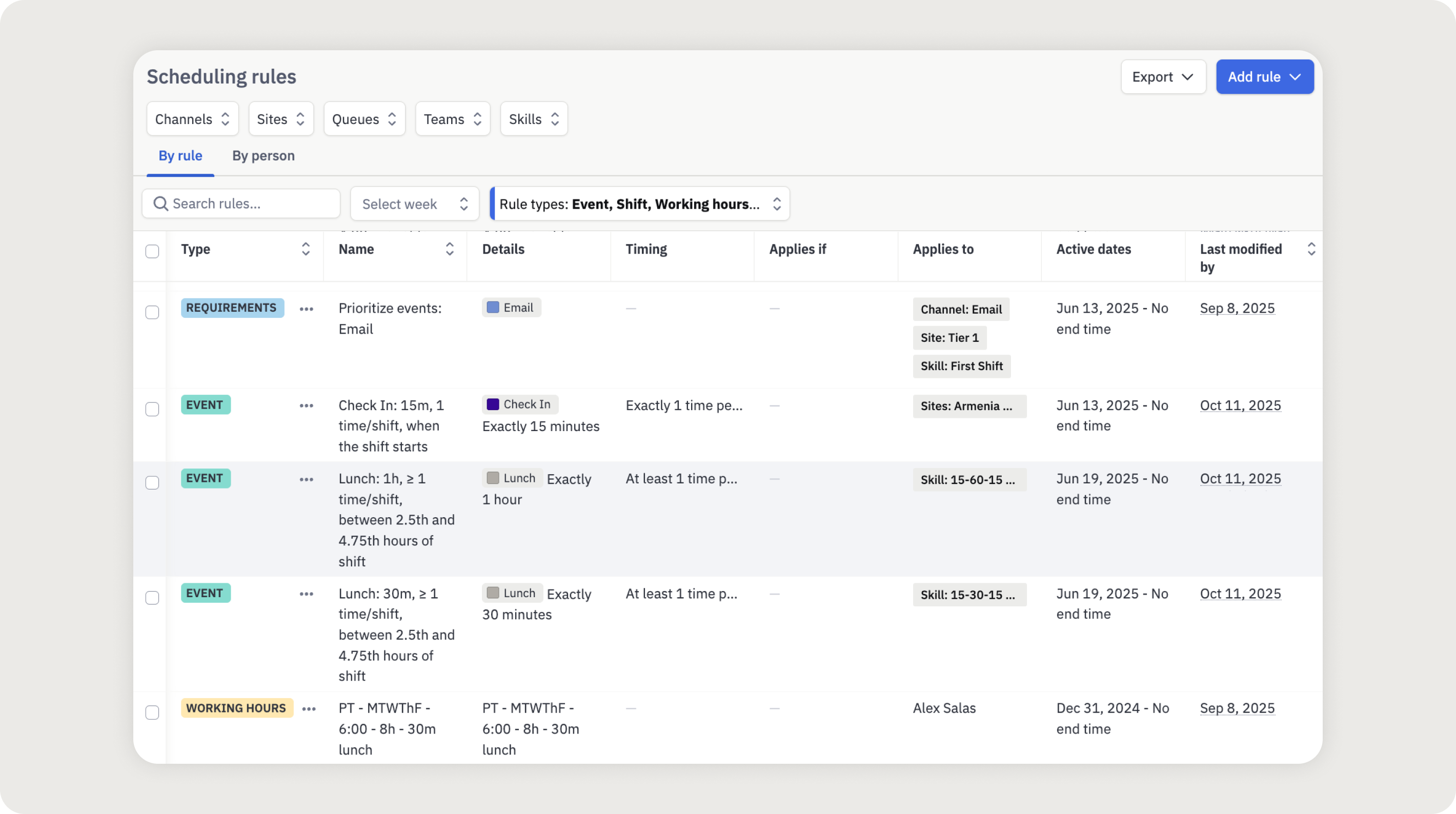
This enabled the features that defined modern scheduling:
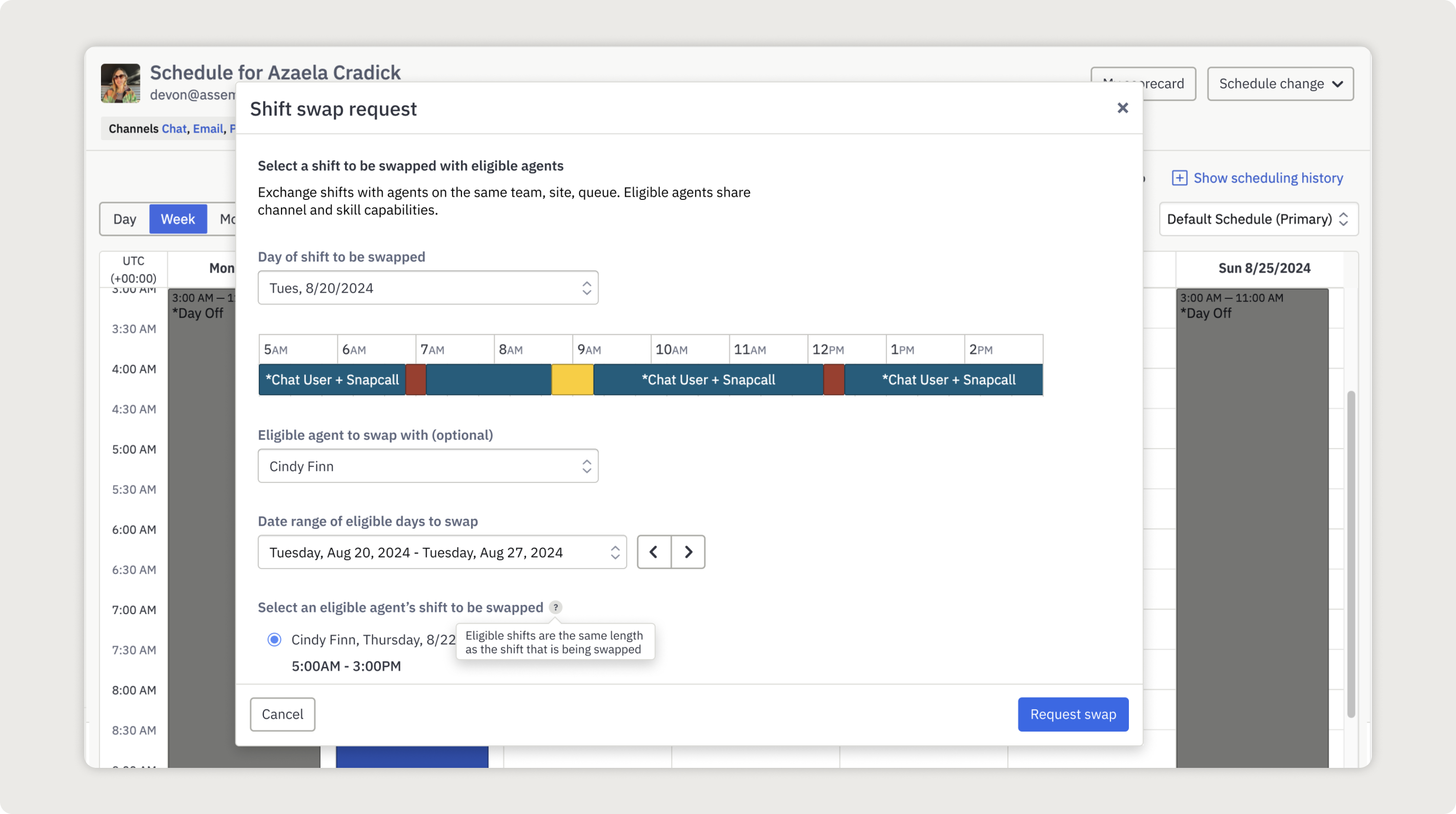
Shift swaps let agents trade shifts directly in-app — completely eliminating Slack DMs and spreadsheets. Administrators set eligibility rules, and the system handled the rest.
Auto PTO evaluates staffing thresholds and auto-approves time off when coverage allows. Manual approval time dropped by 80%.
Schedule layers eliminated coverage gaps. When meetings moved or training got canceled, productive work underneath remained scheduled.
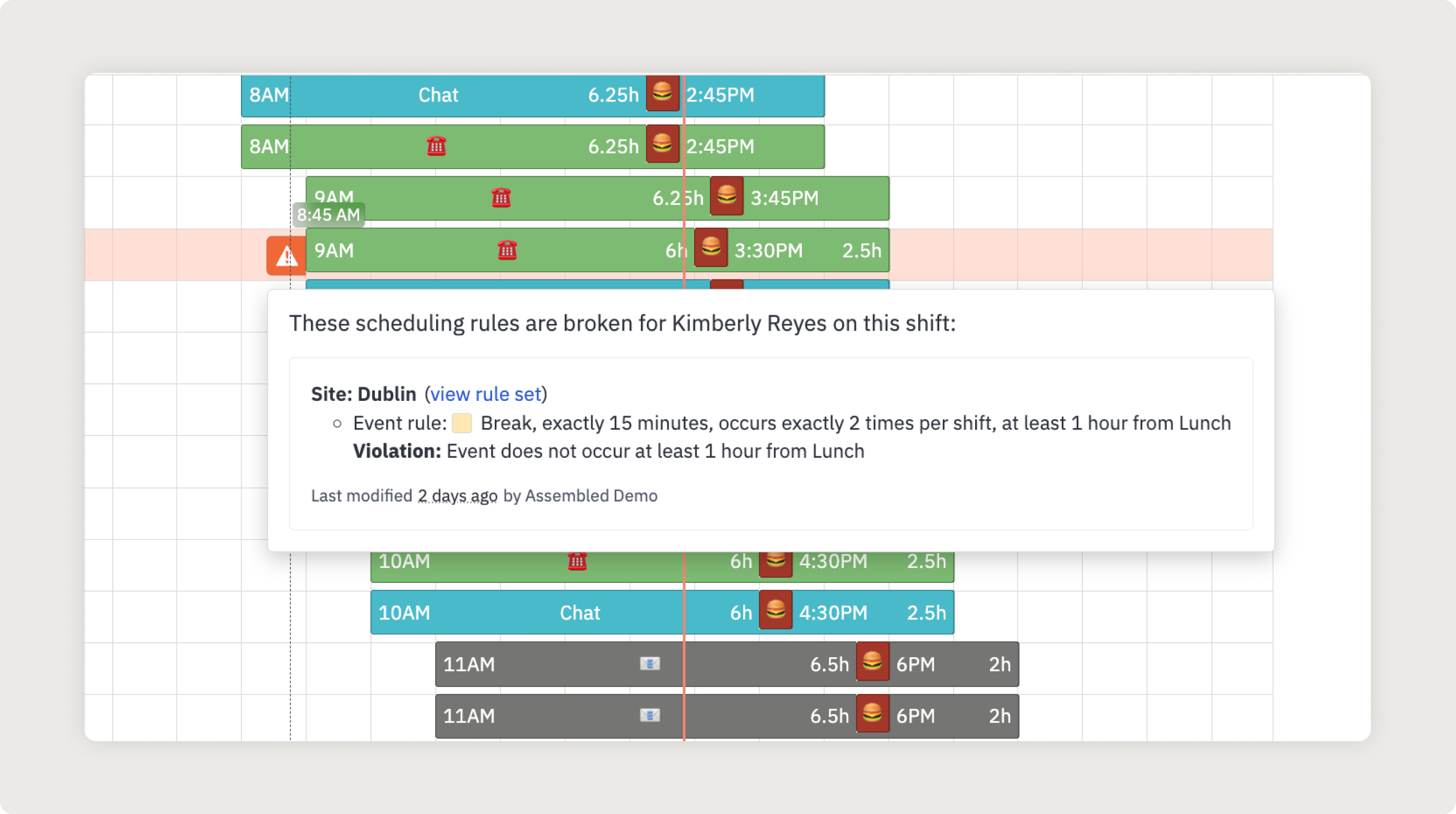
Automatic compliance checks flagged violations before they became problems.
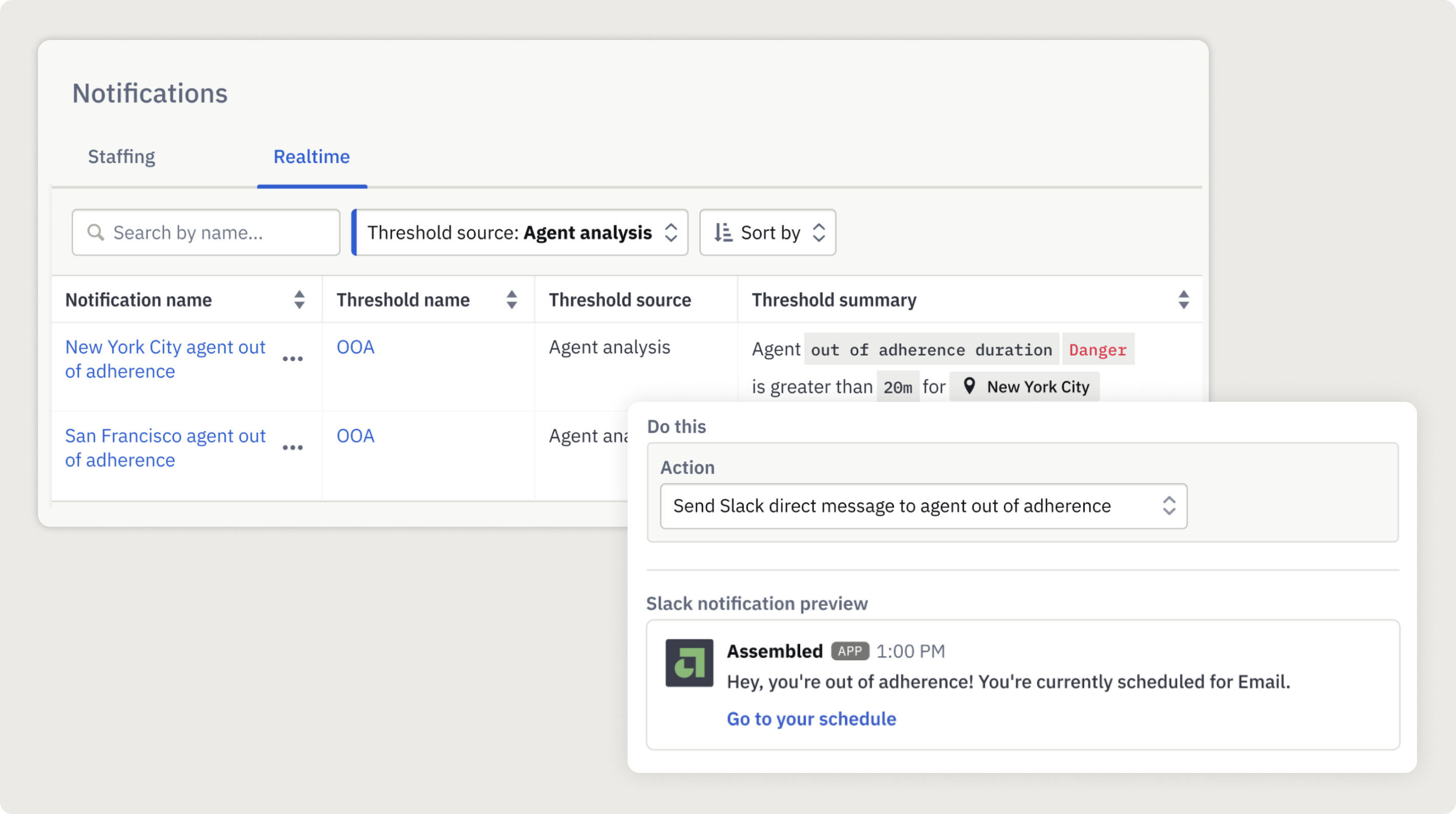
Real-time notifications shifted WFM from reactive to proactive. Schedule change notifications automatically alert agents via Slack or email when their schedule changes, while adherence alerts notify agents when they're out of adherence beyond set thresholds — enabling self-correction before small issues become big problems.
AI assistance for human agents
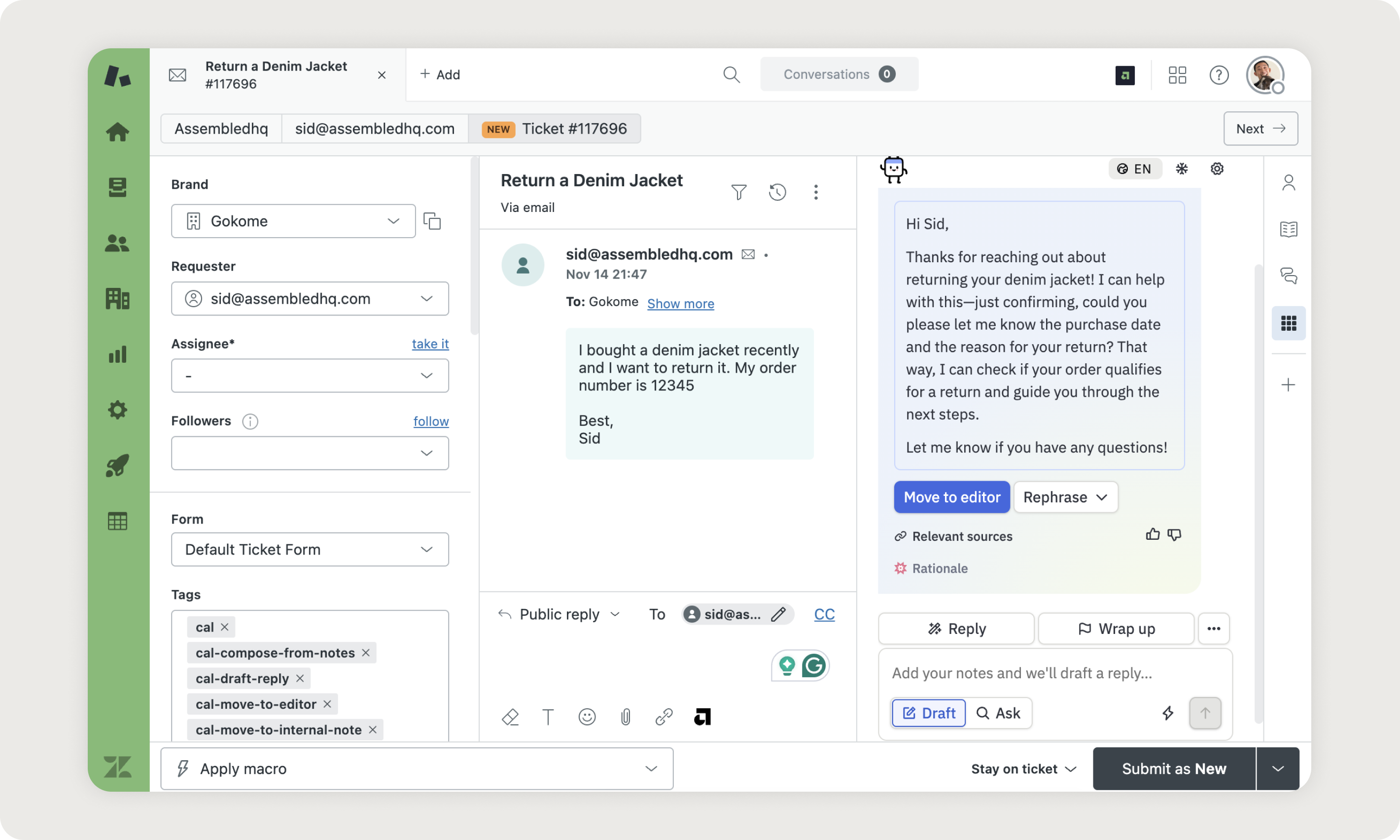
Not every case needs full automation. For complex cases, we ensured human agents had AI working for them.
Full conversation translation eliminated third-party tools. Agents communicated seamlessly across any language without switching tools or losing context.
Macros integration meant Copilot could draft replies and trigger internal actions. Early customers shaved a full minute off every response.
QA Scoring gave teams custom scorecards to evaluate AI performance. AI got better through feedback loops matching real quality standards.
One platform, complete visibility
One navigation brought AI agent tools and workforce management into a single experience. One reporting hub showed everything: human agent metrics, AI-assisted cases, fully automated resolutions. The only connected AI + WFM reporting experience.
Flexcar, a month-to-month car leasing service, leveraged this approach to transform their operation. Starting with WFM in 2023, they expanded to Copilot in early 2024, then rolled out AI agents across all channels. The integrated platform enabled them to achieve 85% containment on email and chat, double agent productivity, and plan for 24/7 coverage without overnight staffing costs. As Lesley Ong, Director of Infrastructure and Strategic Planning, explained: "Having workforce management and AI support under one roof was a major differentiator. It's not just about having agents handle contacts quicker — it's about orchestrating the entire operation."
Support leaders could see that AI was resolving 70% of password resets but only 30% of billing questions — and immediately adjust staffing. They could track how Copilot boosted productivity and forecast the impact on handle time. They could connect automation performance to scheduling decisions in real time.
For teams managing external vendors, we introduced the BPO Billing Report — giving operations leaders a structured way to validate vendor invoices by comparing actual hours worked against what's billed. With customizable billing rules for each vendor and one-click CSV exports, invoice verification became straightforward instead of painful.

9+ new integrations
We expanded how teams could connect Assembled to their existing tools: Kustomer, Gladly, Dixa, ServiceNow, Regal, Evaluagent, Shopify, Confluence, Helpjuice, along with new API endpoints — joining existing connections that power workflows and process contact data.
The results
Teams hit 70%+ resolution rates on chat within their first week. AI Voice handled complex workflows end-to-end. Customers automated time-off approvals and watched manager overhead drop by 80%.
Throughout 2025, AI resolution volume grew 62× from January to December. The steepest acceleration came in the second half of the year — once teams saw results, they deployed everywhere.
Support teams that had spent years trying to "do more with less" suddenly could. AI handled repetitive, high-volume work with speed and consistency. Humans tackled complex, high-value cases with full context and AI assistance. Managers had complete visibility into both — forecasting, scheduling, and optimizing across the entire operation.
What 2025 proved
The future of support isn't human or AI. It's human and AI — working together, managed together, measured together.
But that only works if your infrastructure supports it. If your WFM tool can't account for AI performance, if your AI agent can't hand off cleanly to humans, if your reporting shows automation in one place and staffing in another — you're guessing, not orchestrating.
Assembled is the only platform built for this reality. Where AI agents and workforce management share the same foundation. Where automation performance directly informs scheduling decisions. Where you can see, measure, and optimize your entire operation.
What's next
2026 is about pushing orchestration further — smarter scheduling algorithms that optimize across AI and human capacity, deeper analytics that predict performance before it happens, and more intelligent automation that learns from every interaction.
The teams that succeed won't just have good AI or good WFM. They'll have both, working seamlessly together. They'll staff with precision, automate with confidence, and scale without compromise.
Ready to see what orchestrated support looks like?
Book a demo to discuss your 2026 support strategy and see how Assembled connects AI automation with workforce intelligence.